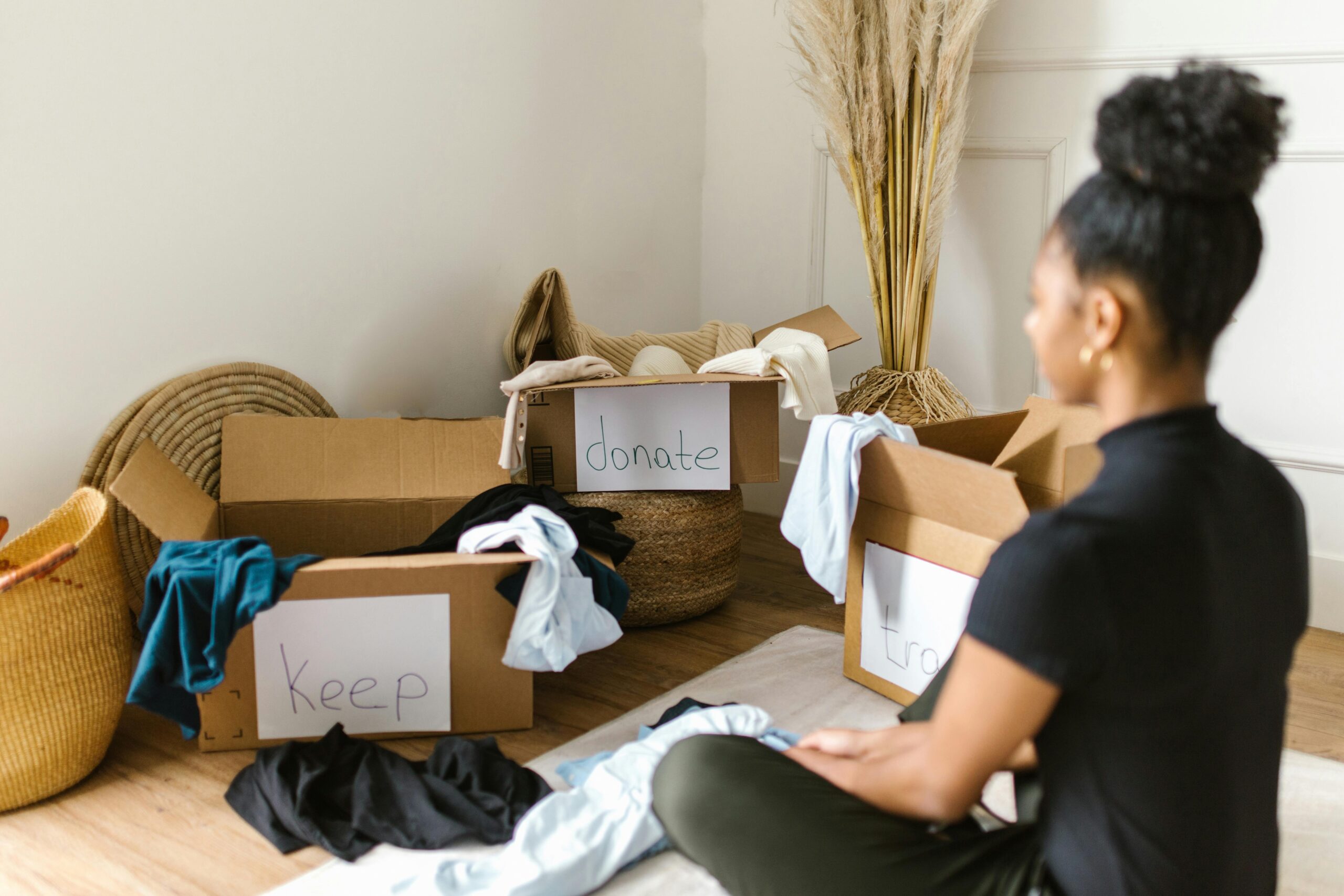
Clutter has a way of sneaking into your home quietly. It starts with a ‘junk’ drawer you’ll “organize later,” a shelf of things you used to love, or a tote of items you swear you’ll need someday. But before long, these small piles begin to take up physical and mental space. If you’ve ever picked something up and felt unsure whether it’s worth keeping, you’re not alone, many people struggle with this moment.
At Maid Impressions Cleaning Services, we work in homes every day, and one thing we hear often is, “I honestly don’t know what counts as clutter anymore.” The truth is, clutter usually builds over time when we hold on to items that we no longer use.
Let’s clear the clutter! A few simple questions can make that decision a lot easier (and your home easier to keep clean in the future).
Question #1: Are You Saving It “Just in Case”?
This is one of the biggest sources of clutter. Many items stay in our homes because of a vague what if. But if you haven’t reached for it in months — or years — that “just in case” moment usually never comes. Why let it sit and collect dust? Most people discover that once they let go of these items, they never missed them.
Question #2: Do You Have More Than One?
Duplicates pile up slowly. Extra water bottles, three nearly identical spatulas, five blankets for one bedroom, it all adds up. Keeping multiple versions of something you rarely use can make storage areas feel packed and overwhelming. We say, keep the one you love and let the rest move on.
Question #3: Have You Used It in the Last Year?
A full year gives you every season, holiday, event, and routine. If an item hasn’t been used in that time, there’s usually a reason.
Clothing that doesn’t fit, gadgets you meant to try, or décor you stopped putting out can all fall into this category. If it hasn’t earned its space in the past year, chances are, it may not earn it in the next one.
Question #4: Does It Need to Be Repaired — and Will You Actually Repair It?
You probably have a basket or corner dedicated to things that need fixing someday. If you look at an item and realistically know you won’t repair it, letting it go is often the kinder option. You free up space, and the guilt of unfinished projects disappears along with it.
Question #5: Could You Borrow It Instead?
Some things are worth owning. Others make more sense to borrow occasionally. Specialty kitchen tools, craft supplies, or equipment used once every few years often become clutter simply because they sit untouched. Borrowing keeps your home lighter and more intentional.
Question #7: Do You Have Space for It?
If something doesn’t have a place to live, it will always feel like clutter! A well-organized home means all items have a home where they fit comfortably without causing stress or overcrowding.
Question #8: Are You Keeping It Out of Guilt?
Sentimental clutter is the hardest to handle. Maybe it was a gift, an inherited item, or something tied to a past version of yourself. Keeping something because you feel obligated doesn’t make your home feel loved. It often makes it feel weighed down. You can appreciate the memory without storing the object.
Question #9: Do You Truly Love It?
This is the most important question of all. If you love something, it belongs in your home. If you don’t, releasing it creates space for the things that support your life now.
What if I truly love it, but it isn’t something I want to display?
If you have items you truly love but prefer not to display, consider these creative storage solutions:
- Create a Memory Box: Dedicate a decorative box, chest, or trunk to store your meaningful items. This way, they remain accessible without needing to be on display.
- Rotate Your Decor: Sometimes it’s not about whether you want something out; it’s about timing. Consider rotating pieces seasonally, allowing each item to shine at its best.
- Hidden Displays: Utilize photo albums or scrapbooks for cherished photographs or memorabilia that you don’t need to view daily.
- Functional Storage: Invest in furniture that doubles as storage, like ottomans or benches with compartments, to keep beloved yet private items close yet unseen.
This approach lets you keep the sentimental and treasured close without compromising your home’s aesthetic.
Bonus Tip: Many people take photos of an item that holds sentimental value and put it in a scrapbook or junk journal to look at later.
A Cleaner, Calmer Home Starts with Honest Moments
Decluttering doesn’t have to be overwhelming. One drawer, one shelf, and one small decision at a time is enough. And once your home feels lighter, cleaning becomes easier and far less stressful.
When you’re ready for help maintaining a space that feels tidy and peaceful, Maid Impressions Cleaning Services is here to step in so your home stays that way and all your hard work never goes to waste!